Infrastructure
The Pacific: Mexico's window to Asia
Energía Costa Azul shipped the first LNG from Mexico's Pacific coast. The route to Asia is shorter and does not depend on Panama, but five of six projects still lack financing and the rules for domestic industry have not arrived.
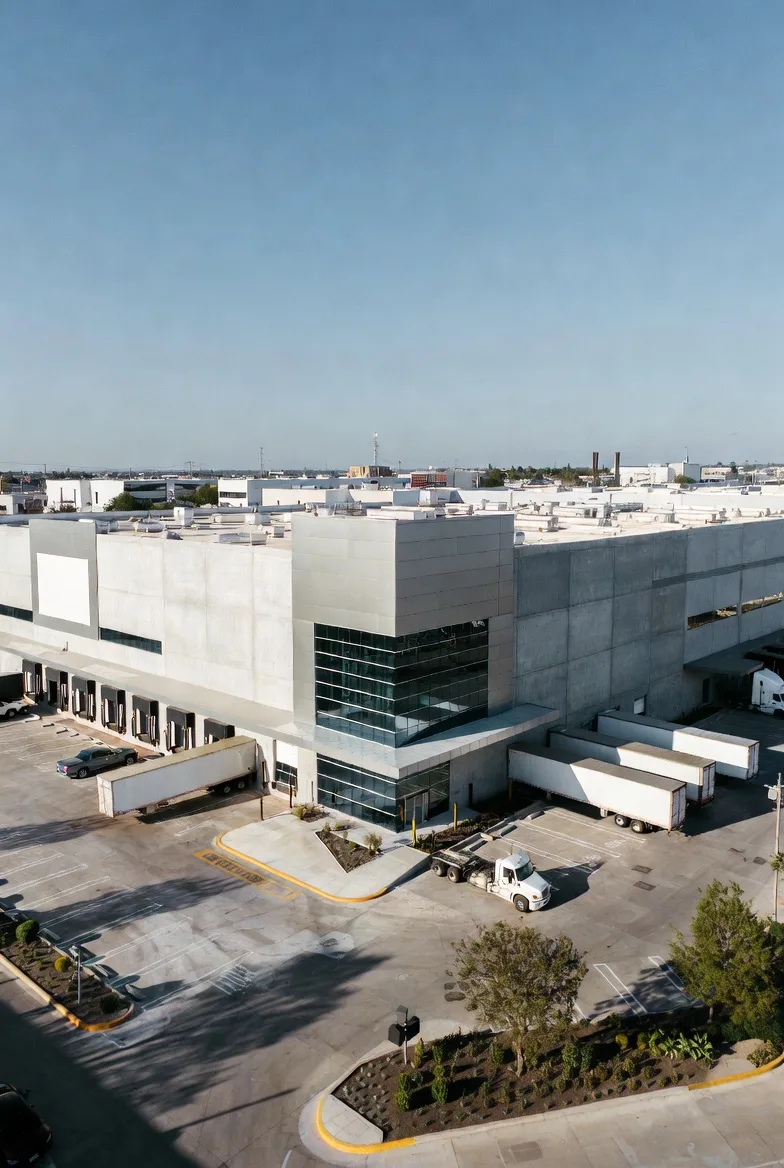
Behind-the-meter generation and storage for industrial plants across the Bajío.
Let's discuss your projectBajío Ventures · September 2026
On 8 July 2026, Energía Costa Azul (Sempra, Ensenada) shipped its first LNG cargo. It is the first export terminal on Mexico’s Pacific coast. With a capacity of 0.4 Bcf/d, it tripled the country’s LNG export capacity (EIA).
The logic is geographic
From the U.S. Gulf Coast, a vessel takes 20 days to reach Japan through Panama, and 31 or 34 if the canal is unavailable (EIA). From Mexico’s Pacific coast there is no canal in the way. Mexico Pacific estimates that shipping costs fall by more than half (Mexico Pacific).
| Route to Japan | Days |
|---|---|
| U.S. Gulf Coast via Panama | 20 |
| U.S. Gulf Coast via Suez | 31 |
| U.S. Gulf Coast via Cape of Good Hope | 34 |
| Mexican Pacific | Direct route, no canal |
Pacific projects as of September 2026
| Project | Location | Capacity | Status | Source |
|---|---|---|---|---|
| Energía Costa Azul, phase 1 | Ensenada, BC | 0.4 Bcf/d | Operating since Jul 2026 | EIA |
| ECA, phase 2 | Ensenada, BC | 1.6 Bcf/d | Proposed | EIA |
| Saguaro Energía | Puerto Libertad, Son. | 30 Mtpa | No FID; court suspension (Apr 2026) | GEM |
| Sierra Madre pipeline | Chihuahua–Sonora | ~800 km | Not before 2028 | GEM |
| Amigo LNG | Guaymas, Son. | 7.8 Mtpa | No FID; environmental injunction (Jun 2026); ASEA permit (Apr 2026) disclosed in Sep | GEM |
The opportunity is real, but conditional. Of six projects proposed on the Pacific, five have failed to secure financing (IEEFA). The two large ones in the Gulf of California are held up by environmental courts. Meanwhile, the gas industry projects USD 7.5 billion in pipelines and virtual transport between 2026 and 2030, not counting LNG terminals (AMGN).
What it can bring
- New pipelines anchored by export contracts.
- Additional capacity for industry in corridors that have no gas today.
- Attraction of energy-intensive consumers, such as data centers.
What to watch
- Capacity priority: if exports come first, domestic industry gets what is left.
- Regulation: the CNE’s general administrative provisions (DACG) on open access and tariffs are still pending.
- Environment: the Gulf of California is a World Heritage Site, and judges have already stepped in.
The Pacific is an opportunity for the country. For it to be one for domestic industry as well, the rules have to arrive before the ships.
Sources: EIA — Energia Costa Azul, Mexico’s second LNG terminal, shipped first cargo (Jul 2026) · EIA — Expanded Panama Canal reduces travel time for U.S. LNG to Asian markets · Mexico Pacific — strategic location · Global Energy Monitor — Saguaro Energía LNG Terminal · Global Energy Monitor — Costa Azul LNG Terminal · IEEFA — North American LNG Export Tracker · Dossier Político — judge halts Amigo GNL (18 Jun 2026) · Dossier Político — ASEA environmental permit for Amigo GNL (21 Sep 2026) · Petróleo & Energía — AMGN: USD 7.5 billion in private gas pipeline and transport investment (19 Jun 2026)
Bajío Ventures, operating under the Bajío Invest brand, is a Mexican energy infrastructure investment group based in Guanajuato: capital, a data platform on the regional industrial base and a German industrial channel, with its own advisory presence in Berlin.
Behind-the-meter generation and storage for industrial plants across the Bajío.
Let's discuss your projectThis article is also available in Spanish. Read in Spanish