Thesis
Bavaria's hidden champions, and why the Bajío does not yet have its own
Bavaria has 296 world market leaders in their niche, almost all family-owned and far from Munich. Many already produce in the Bajío. The region hosts their plants, but not their headquarters, their engineering or their ownership.
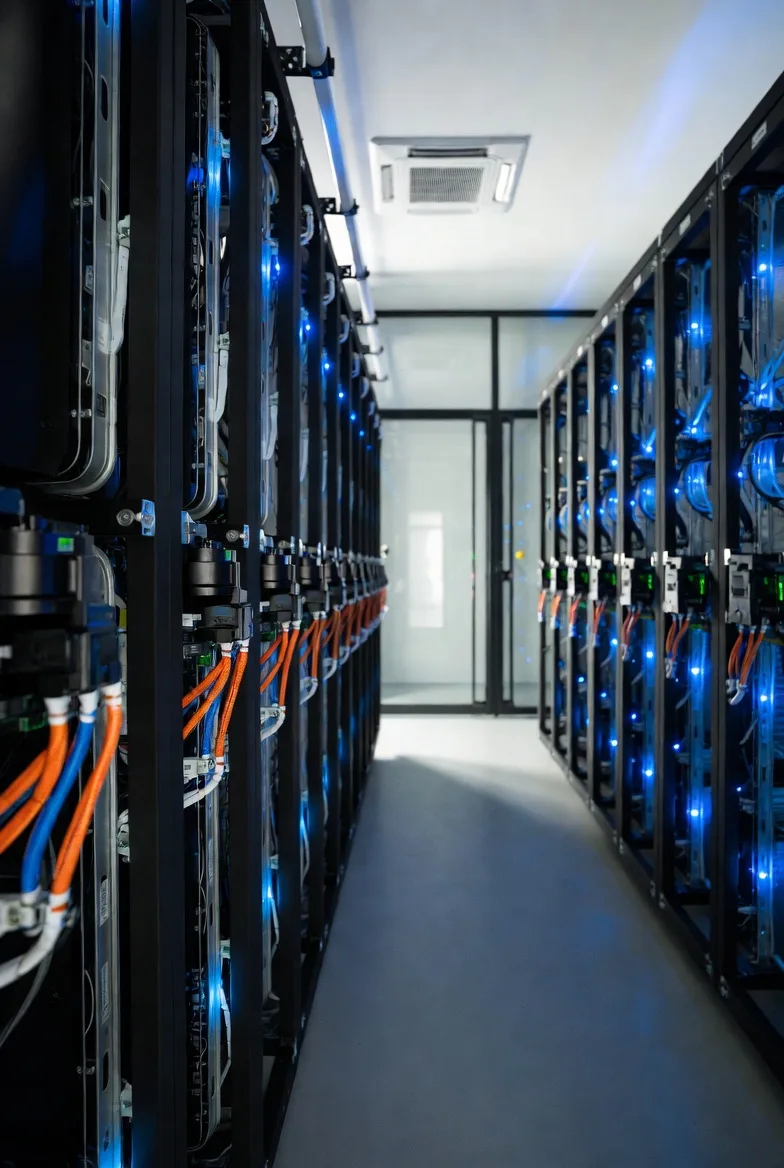
Generation, storage and connection infrastructure for industrial plants in the Bajío.
Let's discuss your projectBajío Ventures · April 2026
In If the Bajío were in Europe, the US or China we compared the Bajío with southern Germany and pointed to a gap that foreign investment does not close: the Mittelstand, the mid-sized firms that lead a niche worldwide. This note looks closely at Bavaria’s. The conclusion is uncomfortable and useful at once: many of them are already in the Bajío — as plants, not as companies.
What a hidden champion is
The term is Hermann Simon’s: a company among the top three in the world in its market, or number one on its continent, with revenue under 5 billion and almost no public profile outside its industry. It makes valves, sensors, machines or components that others use without knowing who made them.
The Lexikon der Weltmarktführer counts 1,478 world market leaders in Germany. Bavaria has 296, the third-highest figure, behind Baden-Württemberg (387) and North Rhine-Westphalia (377): 22 per million inhabitants.
They are not in Munich
Munich hosts 32 of the 296 and Nuremberg 10. About 86% are outside the two big cities: in Rehau, Vilsbiburg, Traunreut, Neutraubling, Landsberg, Burghausen or Coburg, all small or mid-sized towns. Across Germany, a federal study found that a third of hidden champions are headquartered in small towns, that 74% are family businesses, and that the towns hosting them outperform their peers on jobs, tax revenue and the ability to draw workers.
That matters for the Bajío, whose industry is also spread across mid-sized cities — Celaya, Irapuato, Silao, Apaseo el Grande, Villa de Reyes — rather than concentrated in one metropolis.
The ones already in the Bajío
| Company (Bavarian HQ) | Niche | Size | In the Bajío |
|---|---|---|---|
| Maschinenfabrik Reinhausen (Regensburg) | On-load tap changers for power transformers; by the company’s account, about half of the world’s electricity flows through its devices | €1.21 bn / 4,489 staff (2024) | Querétaro, since 2015 |
| REHAU (Rehau) | Polymer solutions | €4.5 bn / ~20,000 (2023) | Apaseo el Grande and Celaya, since 1993; third Celaya plant in December 2023 (USD 25 m) |
| Dräxlmaier (Vilsbiburg) | Wiring harnesses and premium car interiors | ~70,000 staff | San Luis Potosí (2005) and Matehuala (2017) |
| Brose (Coburg) | Automotive mechatronics | €7.7 bn (2024) | Querétaro, three plants, since 1993 |
| Webasto (Stockdorf) | Sunroofs, heaters, EV chargers | — | Irapuato: roof systems and, since 2022, chargers (USD 51.6 m expansion in 2023) |
| Kaeser Kompressoren (Coburg) | Compressed-air systems | — | Querétaro, Mexico headquarters |
| Schaeffler (Herzogenaurach) | Bearings | Large group | Irapuato, since 2008 |
| Grammer (Amberg) | Headrests, armrests, seat suspension | — | Querétaro: its largest plant worldwide |
Brose and Schaeffler exceed Simon’s size limit; Grammer and Leoni — another Bavarian firm, with a cable plant in Apaseo el Grande — are now under Chinese control. Other Bavarian champions, such as Krones (beverage filling), Wacker (polysilicon), Rational (combi ovens) and Heidenhain (encoders), serve Mexico without a Bajío plant.
The reading: the Bajío is already part of the Bavarian Mittelstand’s production network. What stays in Bavaria is what makes these firms champions: family ownership, engineering, product design and the decisions on where to invest.
What explains them
None of these causes is unique to Germany, and almost all of them can be built:
- Family ownership and a long horizon. Three in four German hidden champions are family businesses. They reinvest rather than distribute, and they think in decades, not quarters.
- Dual training. Bavaria had some 246,000 apprentices in 2024, 27% of them in manufacturing. The technician trained inside the company is the basis of continuous product improvement.
- Applied research nearby. The Fraunhofer Society has 27 sites in Bavaria; the state is investing €5.5 billion in its Hightech Agenda, including 1,000 new university chairs.
- Local finance. 56 regional savings banks (Sparkassen) and a state development bank, LfA, which in 2024 channelled €1.86 billion to more than 3,600 firms and municipalities through each firm’s own bank.
- Export orientation from day one. Bavarian industry sells 58% of its output outside Germany.
The energy squeeze
These firms now face the problem we described for southern Germany: expensive electricity and a grid that falls short. In the Bavarian chambers of commerce’s October 2025 barometer, 62% of firms named the electricity price as a brake on investment, and 42% of industrial firms said they were cutting production in Bavaria or moving it abroad. Wacker, which uses about 1% of Germany’s electricity, reported a record loss of €800 million for 2025.
Where do they go? According to a study by the Bavarian business association (November 2025), their top destination for investment abroad is the United States, at 27%. Mexico is not even mentioned. The Bajío has the advantage that many of them already operate here; what it cannot yet offer is certainty that an expansion will be connected to the grid on time. A company leaving Germany over electricity will not move somewhere that lacks it too.
And the Bajío’s champions?
We looked for Bajío-born firms that lead a niche worldwide. We found one clear case: TREMEC, in Querétaro, part of Grupo KUO, which builds high-performance transmissions for sports cars worldwide, with some USD 500 million in sales and more than 2,400 employees. Mabe does much of its manufacturing in the Bajío, but it is a large consumer brand, not a hidden champion. We found no others with published evidence.
This is the most important gap between the Bajío and southern Germany, and another automaker will not close it. It closes when a local supplier to those plants turns its know-how into a product of its own that it sells worldwide. For that it needs what Bavaria had: technicians trained in-house, applied research nearby, patient credit and reliable energy. The last is the one Bajío Ventures can help solve.
Sources: DDW, world market leaders by state · DDW, world market leaders by city · BBSR, hidden champions in small towns · Weltmarktführer-Index, Maschinenfabrik Reinhausen · GTAI, interview with Reinhausen, May-2025 · Transformer Magazine, Reinhausen Mexico in Querétaro · REHAU, Celaya 3 plant · Dräxlmaier in Mexico · Mexico Industry, Brose in Querétaro · Webasto, Guanajuato plant · Kaeser Mexico · Mexico Industry, Grammer Querétaro · Leoni, Luxshare deal completed · LfStat Bayern, apprentices 2024 · Bavarian government, Hightech Agenda · LfA Förderbank Bayern, 2024 results · Sparkassenverband Bayern, 2024 · BIHK, energy-transition barometer 2025 · vbw, internationalisation of Bavarian firms, Nov-2025 · Handelsblatt, Wacker record loss, Jan-2026 · TREMEC
Bajío Ventures — a Mexican energy-infrastructure investment group based in Guanajuato: capital, a data platform on the region’s industrial base, and a German industrial channel, with its own advisory presence in Berlin.
Generation, storage and connection infrastructure for industrial plants in the Bajío.
Let's discuss your projectThis article is also available in Spanish. Read in Spanish