Thesis
If the Bajío were in Europe, the US or China
By its industrial model, the Bajío is North America's Central Europe; by its direct competition, the US Southeast; by its income and its reliance on long land corridors, Chongqing; by what it aspires to be, southern Germany. All four cases teach the same lesson: the region's next stage will be decided by energy.
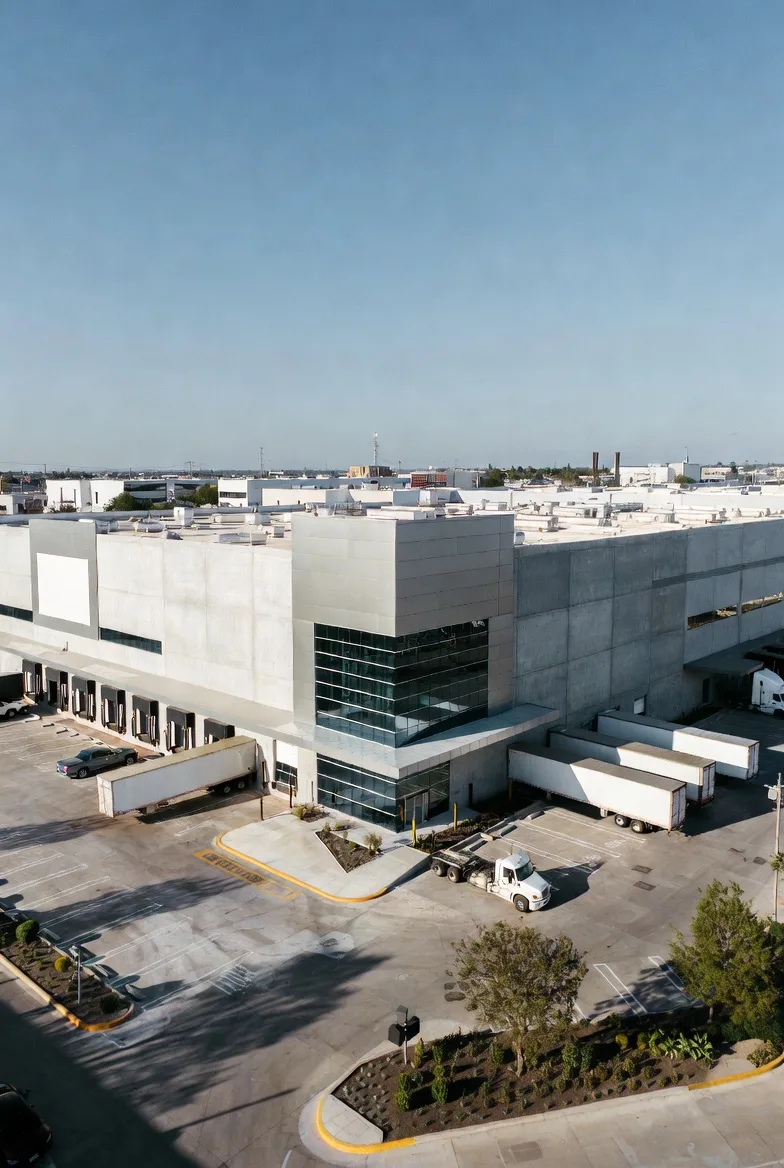
Generation, storage and connection infrastructure for industrial plants in the Bajío.
Let's discuss your projectBajío Ventures · March 2026
To an investor who does not know Mexico, “the Bajío” means little. An equivalence helps more: it is like a region you already know. The question is which one. With the data in hand, there is no single answer: the Bajío resembles Central Europe in its model, the US Southeast in its competition, and Chongqing in its income and logistics. A fourth describes not what the Bajío is but what it aspires to be: southern Germany. Each comparison says something different about what comes next.
The Bajío’s profile
Four states — Guanajuato, Querétaro, Aguascalientes and San Luis Potosí — with 12.8 million people, about 10% of Mexico’s population. They produced 10.5% of national GDP in 2024, some USD 193 billion. Guanajuato and Aguascalientes alone, without counting San Luis Potosí, built 1.47 million light vehicles in 2025: 37% of national output.
What defines the region is not its size but its model:
- Foreign automakers, no home-grown brand. GM in Silao and San Luis Potosí, Toyota in Apaseo el Grande, Honda in Celaya, Mazda in Salamanca, Nissan in Aguascalientes, BMW in San Luis Potosí. Querétaro builds no cars: it makes auto parts and aerospace components, with about 80 firms and some 10,000 jobs in its cluster.
- Capital from many origins. In 2025, foreign investment was led by the US in Querétaro, Germany in San Luis Potosí and Japan in Guanajuato and Aguascalientes.
- Low labour cost relative to its market. The average IMSS-registered wage in Guanajuato was around MXN 556 a day in late 2025: close to USD 4 an hour.
- Inland. Querétaro is 912 km by road from Nuevo Laredo. The way out is Highway 57, the railway and the Guanajuato Puerto Interior dry port.
- A physical constraint. Almost all of Guanajuato’s aquifers are in deficit, and the region’s power grid can no longer connect new industrial load on time.
The three analogue regions
| Bajío | Central Europe (Czechia, Slovakia, western Hungary) | US Southeast (South Carolina, Alabama, Tennessee) | Chongqing (China) | |
|---|---|---|---|---|
| Population | 12.8 m | ~11.6 m in the plant regions | 18.1 m | ~32 m |
| GDP per person | ~USD 15,000 | USD 23,000–32,000 | ~USD 72,500 | ~USD 14,800 |
| Relative to its main market or country | ~17% of the US | 41–56% of Germany | 81% of the US average | ~106% of the Chinese average |
| Vehicle output | 1.47 m (Gto + Ags, 2025) | 2.9 m (2024) | Alabama alone: 1.3 m a year of capacity | ~2.5 m (Jan–Nov 2025) |
| Automakers | GM, Toyota, Honda, Mazda, Nissan, BMW | Škoda-VW, Hyundai, Toyota, Kia, Stellantis, Audi, Mercedes, BMW | BMW, Mercedes, Honda, Hyundai, Nissan, VW, Toyota, Mazda | Changan (with Ford and Suzuki in its history), Seres |
| Cost of labour | ~USD 4/h (IMSS wage) | €14.6–18.7/h, 30–39% of Germany | USD 25–28/h (production workers) | — |
| Route to market | 912 km to Laredo; Puerto Interior | 300–500 km to Germany, inside the single market | Inland Port Greer → Charleston, 212 miles | Chongqing–Duisburg rail, 11,179 km |
| Energy | Congested grid, CFE-dominated | Nuclear: 40% (CZ), 42% (HU), 61% (SK) of generation | Integrated utilities (TVA, Southern, Duke); industrial power 9–20% below the US average | Hydro dependence; drought-driven factory shutdowns in 2022 |
Bajío: 2020 Census population; 2024 GDP (INEGI) at the 2024 average FIX exchange rate; GDP per person divides 2024 GDP by 2020 population, so it is slightly overstated. Central Europe: NUTS2 regions hosting the plants; passenger-car output; 2024 hourly labour cost in manufacturing (Eurostat). Southeast: BEA 2025 (preliminary); production-worker manufacturing wage, BLS 2025. Chongqing: preliminary 2025 GDP per person; output on the plant-location basis China’s statistics bureau adopted in 2025. The figures compare orders of magnitude, not decimals.
1. Central Europe: the same model, thirty years earlier
Czechia, Slovakia and western Hungary are the closest match to the Bajío in model: the low-cost periphery of a rich market, industrialised since 1990 with foreign capital — German, but also Korean, Japanese and French — at wages a third of the core’s. The academic literature calls it the auto industry’s “integrated periphery”. Slovakia now builds more cars per person than any country in the world: 196 per thousand in 2025. Czechia has the largest manufacturing share of its economy in the European Union, setting aside the Irish case: 22% of value added.
The lesson: thirty years on, income did converge. Czechia reached 90% of average EU income in purchasing-power terms in 2024; Slovakia and Hungary, 75–76%. And they settled baseload energy with nuclear before they needed it. The Bajío is much further from its core: its GDP per person is about 17% of the US figure, whereas Central Europe’s is 41–56% of Germany’s. That distance is its competitive advantage today and its unfinished business tomorrow.
2. The US Southeast: the direct competitor
The Southeast auto corridor — South Carolina, Alabama, Tennessee, Georgia — is the Bajío’s institutional analogue and, above all, its direct competitor for the same plants. It has no dominant metropolis either; it industrialised with foreign automakers from the 1980s (Nissan in Smyrna, 1983; BMW in Spartanburg, 1994; Mercedes in Alabama, 1997); it competes with aggressive state incentives; and it has very low unionisation: 2.7% in South Carolina against 10% nationally. Even the dry port has a twin: Inland Port Greer links by overnight train to Charleston and handled 205,523 rail moves in fiscal 2025. BMW Spartanburg was the largest US automotive exporter by value in 2025: about USD 9 billion.
The lesson: the Southeast wins on electricity. Its industrial tariff ran from 6.9 to 7.8 US cents per kWh in January–July 2025, 9–20% below the US average, supplied by vertically integrated utilities — TVA, Southern Company, Duke — that build capacity ahead of load. The arrangement is closer to CFE than to the Texas market, but with sustained investment. The Bajío offers labour at a fraction of the cost; the Southeast offers cheap, plentiful power connected on time. A plant weighing Celaya against South Carolina weighs both.
3. Chongqing: the same income, the same energy risk
In China, the closest analogue is Chongqing. Its GDP per person (about USD 14,800) is almost identical to the Bajío’s, and its vehicle output is of the same order: about 2.5 million vehicles in January–November 2025, making it China’s number-one city. It was built the same way — bringing foreign manufacturing inland from the coast (HP and Foxconn laptops from 2009; cars with Ford and Suzuki partnered with Changan) — and it relies on a long land corridor to its market, the Chongqing–Duisburg railway opened in 2011. It is China’s counterpart to Highway 57.
The lesson comes as two warnings:
- Energy can stop the region. In August 2022 a heatwave with 50% less rain drained the reservoirs of Sichuan, which generates about 80% of its electricity from hydro. Chongqing ordered factories — Japanese ones included — to halt, and Toyota and CATL shut plants in Sichuan. An industrial region that depends on a single source, or a single grid, can be left unable to produce.
- Without a home brand, decisions are made elsewhere. Chongqing has Changan, a state-owned automaker that absorbed what it learned from its foreign partners. Neighbouring Hubei was less fortunate: its output fell from 2.67 million vehicles in 2017 to 1.39 million in 2024 as Chinese brands displaced the foreign joint ventures. The Bajío has no home brand either: the decisions that shape its output are taken in Detroit, Tokyo, Munich and Yokohama.
4. Southern Germany: what the Bajío wants to be, with the same grid problem
Bavaria and Baden-Württemberg do not describe today’s Bajío; they describe what it aspires to be. And they share a problem few people associate with Germany.
The parallels start with history. Bavaria has about 13 million people — almost the same as the Bajío — and in 1950 it was an agrarian state: 31% of its workforce was on the land. It received transfers from richer states until 1986; since 1989 it has been a net contributor, and in 2025 it paid in about €11.7 billion, roughly 60% of the equalisation fund between states. The granary became an industrial core within a generation. Today Bavaria and Baden-Württemberg hold 61% of Germany’s automotive jobs. BMW builds cars in Dingolfing and in Villa de Reyes.
The differences run deep:
- Income. GDP per person across the two states is around €61,000, about USD 69,000: roughly 4.5 times the Bajío’s.
- Home brands and headquarters. BMW, Audi, Mercedes-Benz, Porsche, Bosch and ZF are headquartered there, and Baden-Württemberg accounts for 46% of German automotive R&D spending. The Bajío assembles for brands whose decisions are taken elsewhere.
- Mittelstand. Baden-Württemberg has 34 world market leaders in their niche per million inhabitants. The Bajío has no equivalent.
What they share is the constraint: the industrial region consumes power it does not generate, and the grid cannot carry enough in. After its last nuclear plants closed in April 2023, Baden-Württemberg imported about 45% of the electricity it used in 2024, and Bavaria generated some 20 TWh less than it consumed. The wind is in the north. The two direct-current lines meant to bring it south are late: SuedLink (4 GW, ~700 km) was due in 2022 and is now due at the end of 2028; SuedOstLink (2 GW) was due in 2025 and now starts in 2027. Meanwhile, managing grid congestion cost about €2.95 billion in 2024. In April 2025, Europe’s transmission operators recommended splitting Germany into several price zones; the federal government rejected it in October, with the south opposed, because the south would pay more.
The lesson: not even Europe’s richest industrial region escapes a transmission bottleneck. With one difference in Mexico’s favour: prices here are already nodal, so congestion shows up in each node’s price, and whoever invests in generation next to the load captures it directly. In Germany a single national price hides it, and every consumer pays for it through grid charges.
What they share
All four analogues solved — or suffer — the same thing: energy. Central Europe solved it with nuclear. The US Southeast, with utilities that invest before demand arrives. Chongqing suffered it when its single source failed. Southern Germany suffers it now: it generates the wealth but not the electricity, and its lines are six years late.
The Bajío already has the industrial model, the automakers and the labour cost. What it lacks is a grid that connects the next plant on time. That is the bottleneck, and the investment gap behind it is large: per person, Mexico invests a fraction of what the US or China puts into its power system.
For private capital, that is the concrete opportunity: generation and storage at the point of load, substations and interconnection lines, and backup power for plants that cannot afford an August like Chongqing’s.
A note on the comparison
- The Central Europe analogy is ours. We found no source calling Central Europe “Germany’s Mexico”; there is academic work comparing Spain and Mexico as automotive peripheries in the 1990s, a role that later moved to Eastern Europe.
- China changed how it counts vehicle output in 2025: output used to be credited to the automaker’s headquarters, now to the plant’s location. Chongqing’s figures come not from the official statistical bulletin, which we could not access, but from the city’s media portal.
- Southern Germany’s dollar figures use an approximate rate of USD 1.13 per euro, the 2025 average; the combined GDP per person is our calculation from each state’s statistics office. We found no source calling the Bajío “Mexico’s Bavaria”: that comparison is ours too.
- The Bajío wage is the all-sector IMSS-registered wage, not a manufacturing wage; Central Europe’s is total labour cost; the US figure is the hourly wage of production workers. They are different measures: the comparison is one of orders of magnitude.
Sources: INEGI, GDP by state 2024 · Cluster Industrial / RAIAVL, Guanajuato 2025 · Cluster Industrial / RAIAVL, Aguascalientes 2025 · IMSS via Yahoo Noticias, base wage in Guanajuato, Sep-2025 · SAP, Czech car production 2024 · OICA, production by country 2024 · Eurostat, hourly labour costs 2024 · BMW Group, Spartanburg largest US auto exporter in 2025 · SC Ports, FY2025 rail volume · BLS, union membership by state · EIA, industrial electricity price by state · People’s Daily, Chongqing vehicle output 2025 · iChongqing, China–Europe rail 2025 · Nikkei Asia, Chongqing orders factories to shut, Aug-2022 · Climate Home, heatwave and hydropower in Sichuan, 2022 · VGRdL, GDP by state · Historisches Lexikon Bayerns, fiscal equalisation · beck-aktuell, equalisation 2025 · EY, German automotive industry 2025 · StaLa BW, power generation and imports 2024 · TransnetBW, SuedLink · Bundestag, congestion costs 2025 · ENTSO-E, bidding zone study, Apr-2025 · Clean Energy Wire, Germany rejects price zone split
Bajío Ventures — a Mexican energy-infrastructure investment group based in Guanajuato: capital, a data platform on the region’s industrial base, and a German industrial channel, with its own advisory presence in Berlin.
Generation, storage and connection infrastructure for industrial plants in the Bajío.
Let's discuss your projectThis article is also available in Spanish. Read in Spanish