Market
Bajío industrial parks: occupancy and the pace of construction in 2026
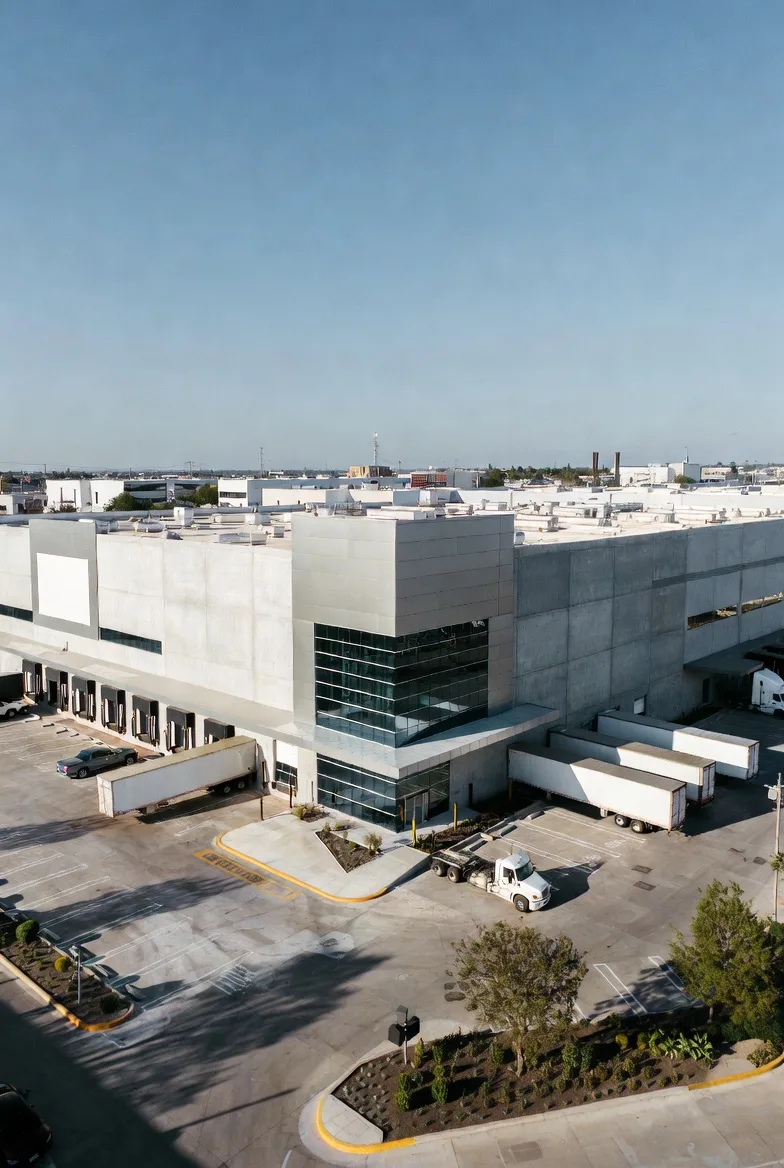
Vacancy in the Bajío rose from 3–4% to a 4–6% range, and construction opened the year at a record pace before cooling. This is not deterioration but normalisation after the nearshoring peak. What sets a park apart is no longer free space, but the power it can deliver.
BI-MAP: the Bajío's industrial and energy base on one map, with AI to cross-reference layers and rank sites.
Request a map demoBajío Ventures · September 2026
The Bajío has left extreme scarcity of industrial space behind, but it remains one of Mexico’s fullest markets. In 2026 regional vacancy rose from 3–4% to a 4–6% range, depending on the source, while construction opened at a record pace and then slowed.
This is not deterioration but normalisation: after the 2024–2025 absorption peak driven by nearshoring, new supply is arriving faster than demand is being signed. The USMCA review and tariff uncertainty explain much of the pause in occupancy decisions.
A note on method: the data platforms (Solili, Datoz, CBRE, SiiLA) define the Bajío differently. Datoz includes Guadalajara; Solili and CBRE usually limit it to Querétaro, Guanajuato, San Luis Potosí and Aguascalientes. Rates are comparable within a source, not across sources.
Occupancy: high, but with more free space than a year ago
Occupancy in Bajío parks holds between 94% and 96%, depending on the source, although vacant space has grown. At the end of April 2026 available space passed 1 million m², 17% more than a year earlier, with inventory growing 5% in four months.
| Period | Bajío vacancy | Source and scope |
|---|---|---|
| Q1 2026 | 6.41% (1.86 M m² available) | Datoz, includes Guadalajara |
| Q1 2026 | 4.1% (Querétaro 6.1%) | Regional Q1 2026 report |
| Q4 2025 | 5.65% (inventory 28 M m²) | Datoz, includes Guadalajara |
| Q1 2025 | 3.5% (Querétaro 4.5%, Aguascalientes 1.2%) | CBRE, 4 states |
| Q3 2024 | 3.4% | CBRE, 4 states |
By state, free space is highly concentrated. At the end of July 2026, Querétaro held 43% of the Bajío’s vacant space, Guanajuato 28%, San Luis Potosí 26% and Aguascalientes just 3%.
- Aguascalientes is the fullest market in the country: 1.2% vacancy in August 2026. In practice, almost no buildings are available.
- Guanajuato shows 3.9% Class A vacancy in Q1 2026; León–Silao and Celaya remain the tightest submarkets.
- Querétaro is where vacancy is rising fastest, as speculative buildings are delivered without tenants, though it is still the region’s highest-absorption market.
- San Luis Potosí combines moderate vacancy with demand dominated by land purchases for owner-built plants.
Demand is the variable to watch. In July–August 2026 industrial demand in the Bajío fell 43% year on year, while central Mexico grew 21%.
Construction: a record start, a slower second half
The Bajío opened 2026 as the region with the most new industrial construction in the country, but the pace cooled from the second quarter. At the end of July about 700,000 m² were under construction across the four states.
| Period | Construction milestone |
|---|---|
| August 2026 | National: 440,000 m² delivered in the month, 13% less than in August 2025 |
| July 2026 | Querétaro: inventory of 8.8 M m² (+5% year on year); construction starts falling |
| July 2026 | Bajío: ~700,000 m² under construction |
| Q2 2026 | Bajío + West: 14 projects started (247,000 m²), six in Guadalajara |
| Q1 2026 | Starts of 204,386 m², the highest in the country; notably Kaizen II (Querétaro), three speculative buildings totalling 83,927 m² |
| Jan–Feb 2026 | 156,000 m² started, +20% year on year; Guanajuato 72% and Querétaro 23% of new construction |
Two patterns define the pipeline:
- Guanajuato builds to order. Its new construction is mostly build-to-suit and pre-leased, which limits vacancy risk.
- Querétaro builds on spec. Parks such as Kaizen II add buildings without signed tenants; this is the main reason its vacancy is rising faster than the rest of the Bajío.
With demand on pause, developers are slowing starts. If the trend holds, new supply in 2027 will be smaller and vacancy should stabilise.
Rents: the Bajío is still the cheapest corridor
Despite higher vacancy, rents are not falling. All four Bajío markets sit below the national average of USD 7.63/m²/month as of July 2026: Aguascalientes is the region’s most expensive at USD 6.34 and Guanajuato the cheapest at USD 5.44. Querétaro is around USD 6, and the market expects increases of 5–10% in 2026.
What it means for each player
- Companies looking for space. 2026 is the best negotiating window in three years, especially in Querétaro. In Aguascalientes and León–Silao the realistic option is still build-to-suit, planned well in advance.
- Developers. The margin lies in product differentiation, not in adding speculative square metres: short delivery times, certification and guaranteed services.
- Energy and infrastructure. With rents stable, what most sets a park apart is the power and water available at signing. A new building without secured substation capacity loses to one with on-site generation and storage. The question is no longer just how much space is free, but how many MW each lot can deliver.
What to watch in Q4 2026
- Net absorption in Q3 and Q4. If the 43% drop in July–August holds, Querétaro’s vacancy could approach levels seen in northern Mexico.
- Construction starts. A sustained decline would confirm that developers are trimming the pipeline before empty inventory builds up.
- The USMCA review. It is the main factor freezing occupancy decisions in the automotive sector, which generates most of the region’s demand.
- Rents in Querétaro. The first sign that vacancy is starting to weigh on prices.
See the Bajío on a map: BI-MAP
Market reports tell you how many square metres are free. They do not tell you whether a lot has grid capacity, who operates next door or which energy projects are on the way. That is why we built BI-MAP, Bajío Invest’s industrial intelligence map.
- One view of industrial establishments (DENUE), energy permits (CNE), interconnection requests (CENACE), public procurement and legal instruments, starting with Guanajuato.
- CENACE nodal prices to see where power is most expensive and where the grid is congested.
- AI to cross-reference layers: filter sites by nearby demand, grid capacity and queued projects, and lay the groundwork for due diligence in hours, not weeks.
- Data that refreshes itself every month, at the real cadence of each public source.
If you are evaluating a park, a site or an energy project in the Bajío, ask us for a demo.
Sources: Solili via Real Estate Market, Bajío vacancy Apr-2026 · GPI News / Real Estate Market, Bajío supply Jul-2026 · Solili via Yahoo Noticias, industrial construction Aug-2026 · Yahoo Noticias, Querétaro inventory Jul-2026 · Líder Empresarial, Bajío leads construction Q1-2026 · Líder Empresarial, construction Jan–Feb 2026 · Líder Empresarial, Querétaro rents 2026 · Clúster Industrial, Q1-2026 market · Centro Urbano, Datoz Q4-2025 · American Industries, Class A vacancy Q1-2026 · Mexico Business News, CBRE Bajío Q1-2025 · Pro Mexico Industry, CBRE Bajío Q3-2024
Bajío Ventures — a Mexican energy-infrastructure investment group based in Guanajuato: capital, a data platform on the region’s industrial base, and a German industrial channel, with its own advisory presence in Berlin.
BI-MAP: the Bajío's industrial and energy base on one map, with AI to cross-reference layers and rank sites.
Request a map demoThis article is also available in Spanish. Read in Spanish